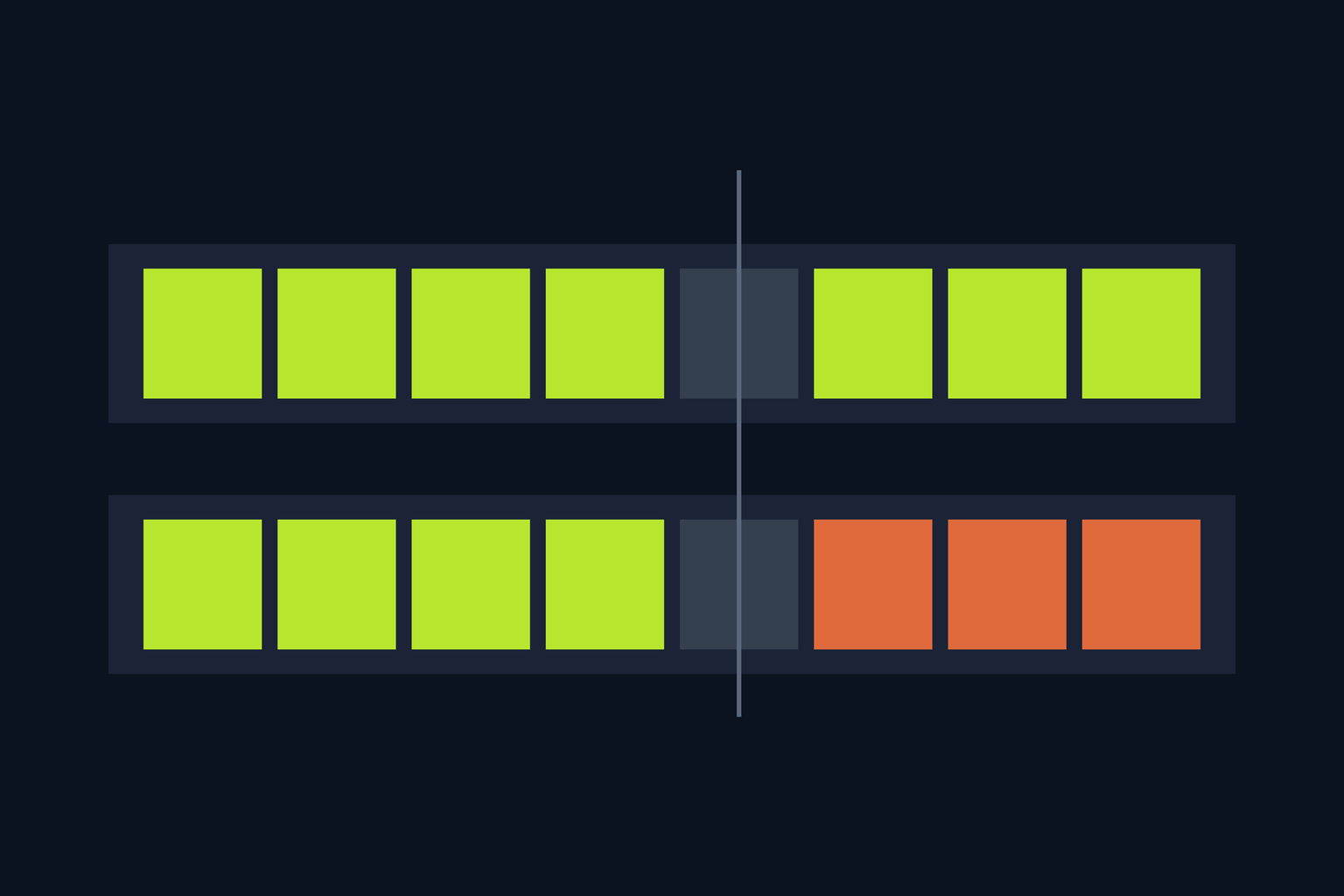
Your Claude conversation has two prefixes, and only one of them errors
A thinking block stays valid against the bytes you sent. The prompt cache keys on the prompt the model renders. The rows where those two disagree cost money with no error.
Tag
39 posts tagged.
A thinking block stays valid against the bytes you sent. The prompt cache keys on the prompt the model renders. The rows where those two disagree cost money with no error.
Anthropic's batch docs tell you to swap the 5-minute prompt cache for the 1-hour one. The swap costs a 60 percent heavier write on every miss, and the hit rate it has to reach to pay for itself is 57.6 percent at the bottom of Anthropic's own published band and outside that band at the top. A correction to my own September post.
A proxy changes where Claude Code's requests go. It also changes which of its own safety nets are still running. The credential variable is a header choice, the base URL alone does not move your billing, and a gateway context limit turns off auto compact recovery. Field log, September 2026.
Claude Code auto compact fires on a per-model token boundary, not a percentage. What it costs is set by prompt cache warmth rather than context size, and a path-scoped rule does not come back afterwards until Claude reads a matching file again.
Claude Code's /fast is not a speed dial, it is a mode. The first toggle in a conversation reprices your whole context, the toggle moves your model one way and does not move it back, and asking for fast is not the same as getting it.
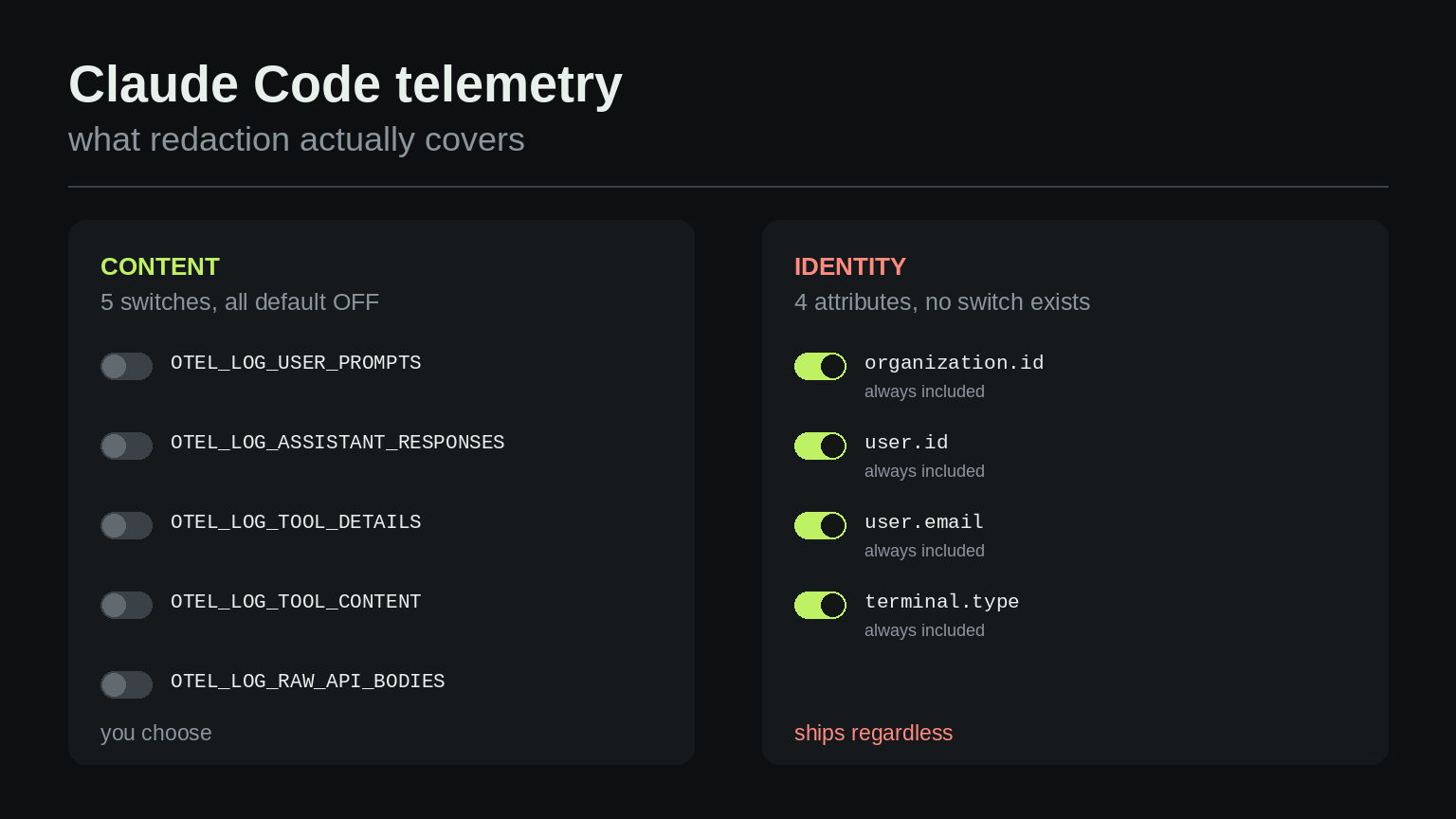
Claude Code's OpenTelemetry export redacts prompts and responses by default. It does not redact who you are. Four identity attributes ship on every datapoint with no switch to turn them off, and one environment variable quietly controls two streams.
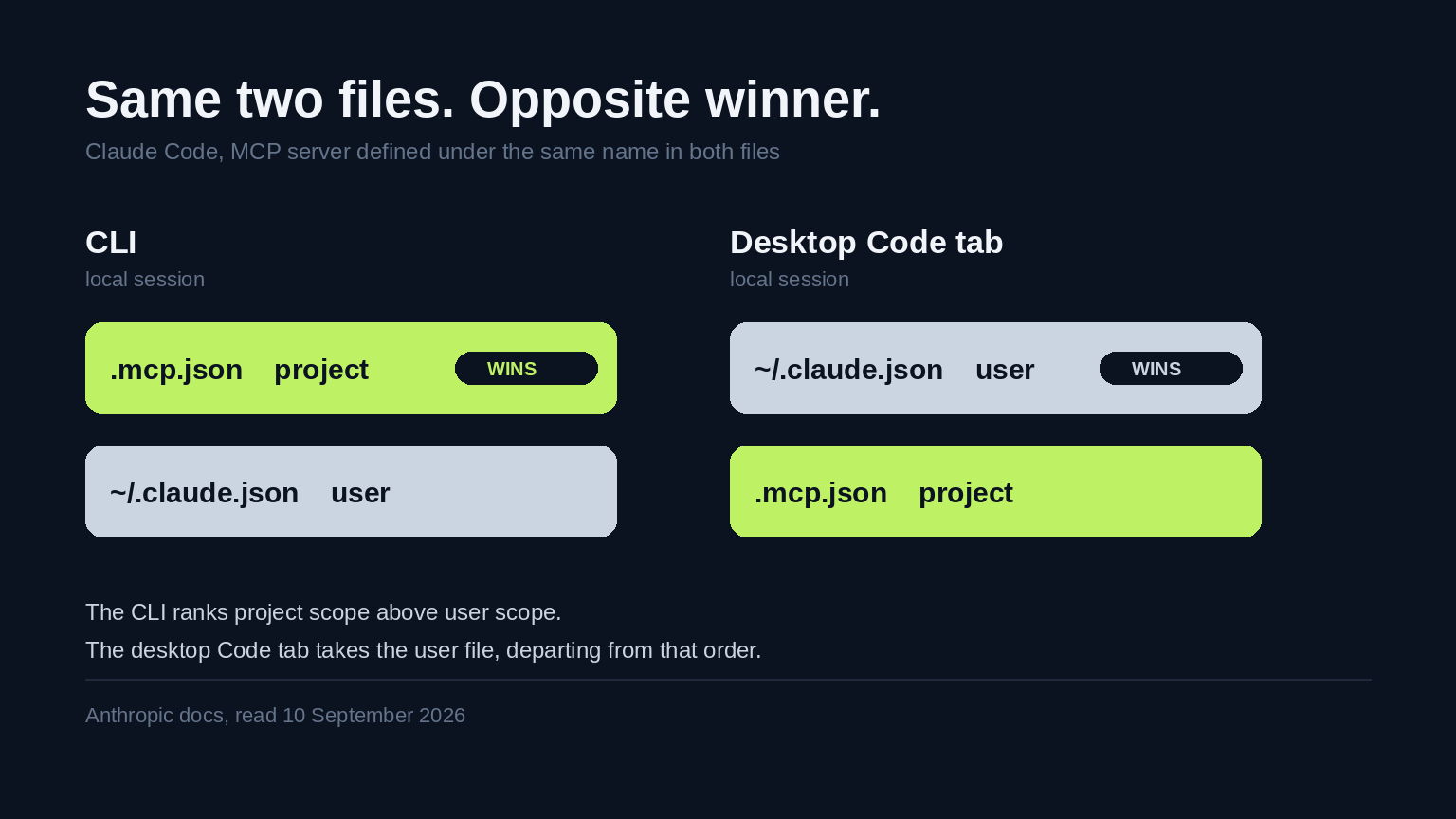
The desktop app and the CLI run the same engine and read the same files. On three points they resolve them in a different order, and Anthropic's own docs call one of them a departure from the CLI scope hierarchy. Read 10 September 2026.
I went looking for which model was answering me and found three separate precedence orders, fourteen documented inputs, and two environment variables that resolve in opposite directions. Read from Anthropic's own docs on 9 September 2026, with the version numbers.
Eleven of fifteen documentation sites serve a real llms.txt. Zero of the five major AI crawler operators document reading yours. Measured on 8 September 2026 with a plain HTTP client, including the commands, plus the one part of the file that does pay off.
Installing Claude Code GitHub Actions is two decisions, and the app install is the one that sticks. The Claude GitHub App grants 11 repository permissions, the action uses 3, you cannot accept a subset, and the set can grow later. A counted field log.
ACP and MCP sit on opposite sides of the agent: MCP connects an agent to tools, ACP connects an editor to the agent. The spec calls itself MCP-friendly and passes your MCP servers inside session/new. The catch is the transport floor: stdio is mandatory, HTTP and SSE are optional capabilities.
The Cost column in ccusage is a counterfactual: what your tokens would have cost at pay-per-use list prices, computed locally. On a Claude subscription it is not your bill, and ccusage's own introduction and Anthropic's own docs both say so. A field log on what the number measures, where the caveat is written, and where it is missing.