GitHub Copilot vs Claude Code: a field log after building the same feature twice (2026)
I built the same CSV-export feature with GitHub Copilot and Claude Code from the same commit. The code came out close. The pricing shape is what actually decides it.
Updated on August 17, 2026
On this page
Quick answer
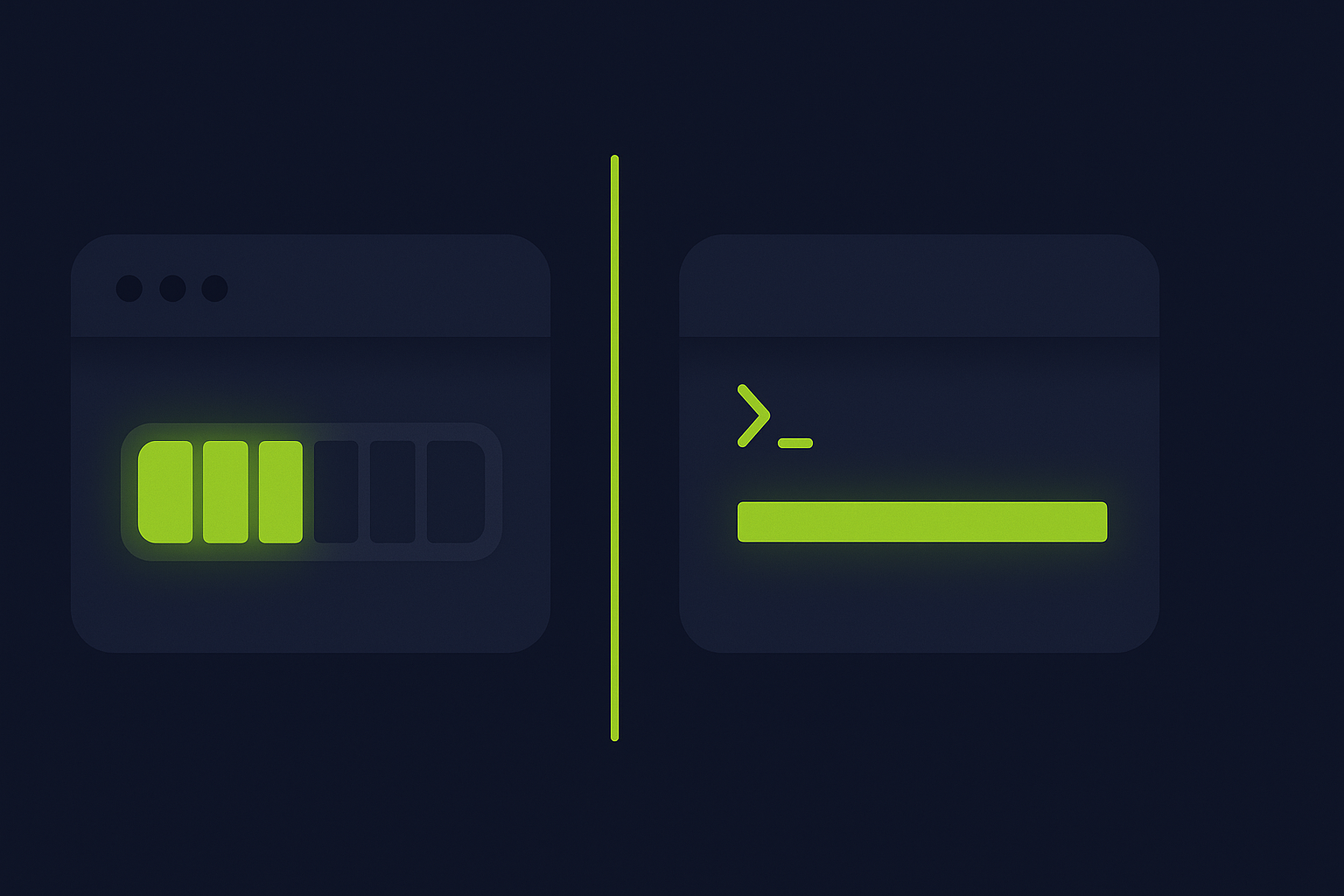
GitHub Copilot vs Claude Code in 2026 comes down to shape, not sticker price. GitHub Copilot is an IDE assistant that lives in your editor and now also ships an agent mode and a copilot CLI; it runs on a flat plan (Free, Pro $10/mo, Pro+ $39/mo, Max $100/mo) with unlimited completions plus a monthly pool of GitHub AI credits for the agentic features. Claude Code is a terminal-first agentic tool that also runs in VS Code, JetBrains, and the web, bundled into a flat Claude subscription (Pro $17-20/mo, Max $100-200/mo) or billed per token on the API. I built the same feature with both, from the same commit. The finished code came out close. The pricing model, and where each agent makes its home, is what actually decided it for me.
Scroll to see more
| GitHub Copilot | Claude Code | |
|---|---|---|
| Home base (2026) | Editor first (VS Code, JetBrains), plus agent mode and a CLI | Terminal first, plus VS Code, JetBrains, web, mobile |
| Default job | Inline autocomplete and edits, now agentic too | Autonomous multi-file changes, run tests, repo-scale refactor |
| Models | 30+ (Claude, GPT, Gemini, Grok), varies by feature | Anthropic Claude models only |
| Pricing shape | Flat plan + a drainable monthly credit pool | Flat subscription under usage limits, or per-token API |
| Permission posture | Configurable | Asks before changing files or running commands |
This is a field log, not a benchmark. One developer, one real task, tested in 2026.
What each one actually is now

GitHub Copilot started life as the autocomplete in your editor. In 2026 it is more than that. Its own plans page lists agent mode and the Copilot CLI on every tier, and a cloud agent that takes an assigned task and opens a pull request from the Pro tier up. It still shines at the inline stuff, and it lets you pick from a long list of models.

Claude Code came at it from the other end. It is a terminal agent that reads your repo, edits across files, runs your tests, and loops until things pass. It also runs inside VS Code, JetBrains, the web, and Slack now. It runs on Claude models only, and by default it asks for permission before it touches your files or runs a command.
So one grew agentic from the editor. The other grew surfaces from the terminal. They are meeting in the middle.
I built the same feature with both
Same repo. Same starting commit. Same task, done twice on two afternoons.
The task: add a CSV export to an existing admin table. A new API route that streams the rows as CSV, a small column-picker so you can choose which fields to include, and a download button wired into the toolbar. Nothing exotic. The kind of chore that eats an hour by hand.
With Copilot, I worked inside VS Code. I opened agent mode, described the export, and let it draft the route and the button. Then I dropped into the flow I know best: type a few characters, let the inline completion finish the CSV-escaping helper, tab, move on. The escaping logic is where Copilot felt fastest. It knew the shape of the code I was already writing.
// Copilot completed the awkward part inline as I typed the signature
function toCsvCell(value: unknown): string {
  const s = value == null ? "" : String(value);
  return /[",\n]/.test(s) ? `"${s.replace(/"/g, '""')}"` : s;
}
With Claude Code, I stayed in the terminal. I described the whole feature once and let it plan, then approve, then edit all three files in one pass. It found the existing table component on its own, matched the toolbar style, and added the route without me pointing at files. When it wanted to run the dev server to check the download, it asked first.
Both produced working code. Both needed a small fix from me (Copilot's column-picker defaulted to every column; Claude Code's stream missing a trailing newline). If you handed me the two diffs with the labels stripped, I could not reliably tell you which agent wrote which. The models underneath are strong enough now that raw code quality was not the deciding line.
The deciding line was somewhere else.
The real story is the pricing shape
Here is the part the head-to-head posts skate past.
GitHub's own plans page (2026) prices Copilot as a flat plan: Free, Pro at $10/mo, Pro+ at $39/mo, Max at $100/mo. Code completions are unlimited on the paid tiers. But the agentic features, chat, agent mode, the CLI, code review, all draw from a monthly pool of GitHub AI credits: Pro includes $15 worth, Pro+ $70, Max $200. Completions are free; the agent work is metered.
That is a real change. Copilot moved to credit-based pricing in June 2026, and the economics of a heavy day shifted with it. One developer wrote about burning through 7,000 credits in a single afternoon of ordinary work after the switch. I did not hit that in one CSV export. But I felt the meter. When the expensive part of your day is the agentic part, and that is exactly the part being metered, you start rationing the thing you bought the tool to do.
Claude Code prices differently. It is bundled into a flat Claude subscription: Pro at $17/mo on an annual plan (or $20 monthly), Max 5x at $100/mo, Max 20x at $200/mo, all including Claude Code. The agentic work is folded into the sub, bounded by usage limits rather than a credit balance you watch tick down. There is also an API path, billed per token, and that one is metered in the way you would expect.
So the shape is the story:
- Copilot: pay a flat plan, get unlimited completions, and draw agent work from a credit pool that can drain in a hard session.
- Claude Code: pay a flat sub, and the agent work is included under usage limits, with a per-token API if you want to meter it yourself.
For a solo dev doing a lot of multi-file agent work, that difference matters more than the $10 versus $17 entry price. Predictable beats cheap when the cheap plan meters the exact work you do most.
They are converging, and that changes the question
The tidy old answer was: Copilot is autocomplete, Claude Code is an agent. Pick by which you want.
That answer is expiring. Copilot has agent mode, a CLI, and a cloud agent that opens PRs. Claude Code has an editor extension and a web surface. The Venn diagram is filling in. On a github copilot vs claude code search you will still see people argue autocomplete versus agent, and one widely-read Hacker News thread still frames it that way, but in daily use both do both now.
So the useful question in 2026 is not which category each belongs to. It is two smaller questions: where does your work actually happen, and how do you want the agentic work billed. Those two answers pick the tool faster than any feature grid. It is the same lens I used comparing Cursor vs Claude Code, and it keeps holding up as these tools blur together.
So which one do I reach for
My rule after the two builds:
- Inline editing inside an editor I live in, many languages, want to pick the model:
GitHub Copilot. - Multi-file change or refactor I want driven from the terminal with an ask-first agent:
Claude Code. - Heavy agentic days, every day, and I want the bill to be predictable:
Claude Codeon a flat sub. - A team that wants an agent to take a ticket and open a PR without leaving GitHub: Copilot's cloud agent.
I did not retire either. Copilot stayed my inline hands; Claude Code stayed my terminal driver. If you want the fuller lineup, it is in the agents I actually reach for.
Where each one loses
Honest disadvantages, because a comparison without them is an ad.
Copilot's credit meter is the friction. When the agentic work is what you bought it for, watching a pool drain on a busy afternoon changes how freely you use it. And spreading across 30+ models is flexible but also inconsistent; the same prompt can feel different depending on the model behind a given feature.
Claude Code loses on reach. It is Claude models only, so if you want to try a cheaper or different model for a task, you cannot. The ask-first posture is correct on irreversible commands and pure friction on a throwaway branch. And it assumes you are comfortable in a terminal; if your whole workflow is inside the editor, its home turf is not yours.
There is no winner here that survives contact with your actual setup. That is the honest read. One developer, two builds, 2026.
P.S. I ran the CSV export a third time by hand, out of stubbornness. It took the hour. The agents were right.
Written by
Dani ReyesDani Reyes writes DevMoment field notes on AI coding agents and vibe-coding workflows, tested on real projects rather than demos.
Frequently asked questions
Is GitHub Copilot or Claude Code better in 2026?
Neither wins outright. Claude Code is stronger on autonomous, repo-scale work you would otherwise do by hand, run from the terminal. GitHub Copilot is stronger on fast inline edits inside your editor across many languages and models. In my build, the finished code was close; the difference was the workflow shape and the way each one bills you.
How is GitHub Copilot's pricing different from Claude Code's in 2026?
Per GitHub's own plans page (2026), Copilot is a flat plan (Free, Pro $10/mo, Pro+ $39/mo, Max $100/mo) with code completions unlimited on paid tiers, plus a monthly pool of GitHub AI credits (Pro $15, Pro+ $70, Max $200) that powers chat, agents, the CLI, and code review. Claude Code, per its product page, is bundled into a flat Claude subscription (Pro $17-20/mo, Max 5x $100/mo, Max 20x $200/mo) or billed per token on the API. So Copilot meters the agentic work with a drainable credit pool on top of the sub; Claude Code folds it into the flat sub under usage limits.
Does GitHub Copilot have an agent mode and a CLI now?
Yes. As of 2026, GitHub's plans page lists agent mode and the Copilot CLI as included on every tier, and a cloud agent that can take an assigned task and open a pull request starting at the Pro tier. That is why the old 'Copilot is just autocomplete' line no longer holds.
Can GitHub Copilot use Claude models?
Yes. Copilot lists 30+ models including Claude (Haiku, Sonnet, Opus), GPT, Gemini, and Grok, though model options vary by feature. Claude Code runs on Anthropic's own Claude models only. If model choice matters to you, that is a point for Copilot; if you specifically want Claude's behavior end to end, that is a point for Claude Code.
Which one is cheaper for heavy agentic coding?
It depends on how much agentic work you do. On Copilot, completions are unlimited but agent runs, chat, and CLI usage draw down the monthly credit pool, so a heavy day can drain it fast (one developer described burning 7,000 credits in an afternoon after the June 2026 credit-pricing shift). Claude Code's flat sub bounds heavy agentic work by usage limits rather than a credit meter, which is more predictable for consistent heavy use; the API path, by contrast, is pay-per-token.
Do I have to pick just one?
No, and I do not. I keep Copilot for inline speed inside the editor and Claude Code for the terminal-driven, multi-file work. They overlap more than they used to, but the home base is different: Copilot lives in the editor, Claude Code lives in the terminal.
Keep reading

The AI Coding Agents I Actually Reach For in 2026
Six AI coding agents sit in my dock in 2026, but I do not open all six every day. Here is the honest field log of which one I reach for when the task is a refactor, a chore, or a tight edit loop, plus the routing rule that keeps surviving.

Cursor vs Claude Code: I Ran Both Side by Side for a Month (2026 Field Log)
A month of running Cursor and Claude Code on the same repo. The honest 2026 verdict: it is not either-or, and the real question is not IDE vs CLI.

Aider vs Claude Code: A Field Log From One Real Task (2026)
I ran the same task in Aider and Claude Code on the same model. The code converged; the workflow did not. The real split is where your undo lives: git or the agent.