Claude Code Router: What I Actually Route (2026)
I lived on Claude Code Router for two weeks in 2026. Here is the per-task routing config I actually run, and where routing to cheap models quietly wrecks a session.
On this page
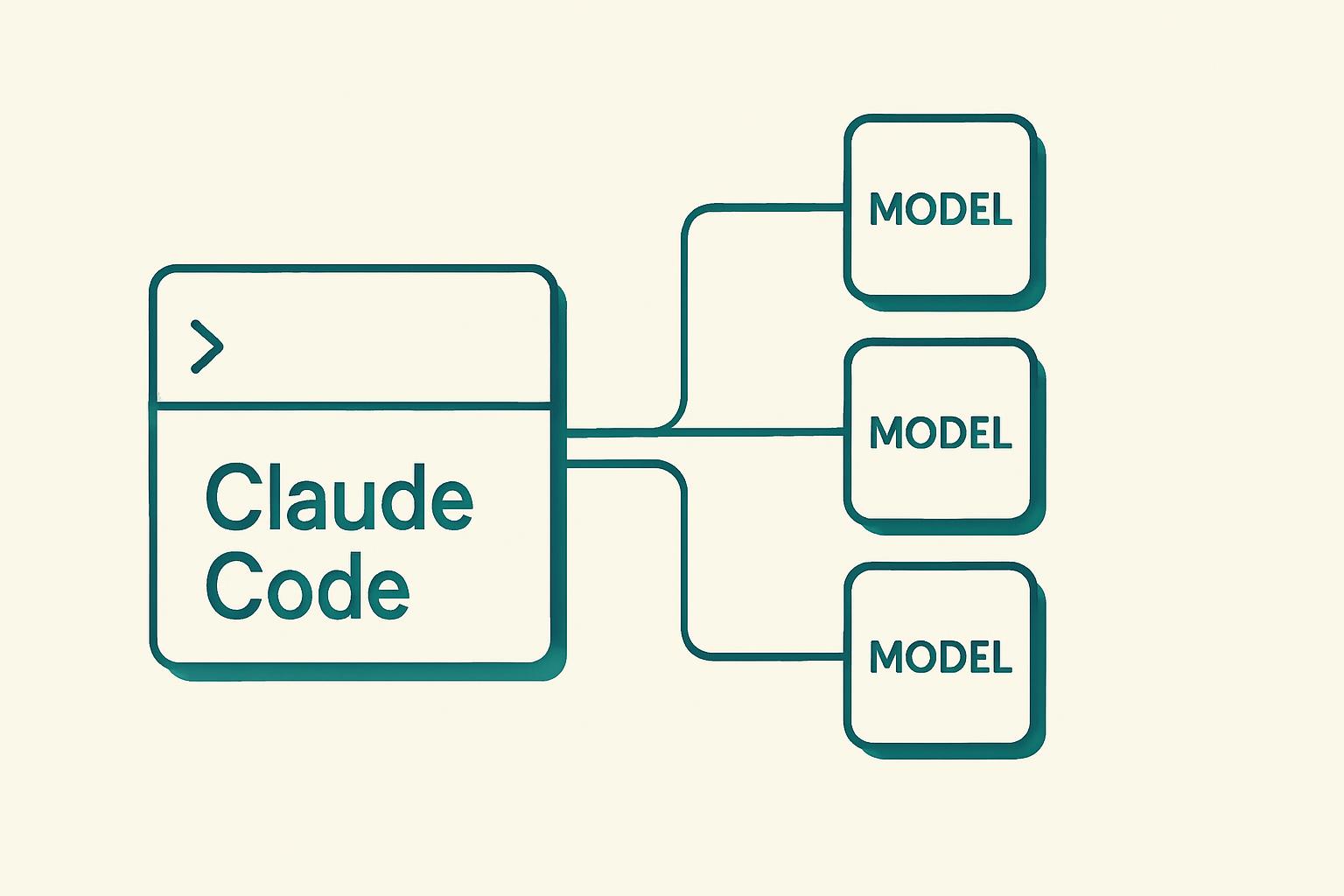
Quick Answer: Claude Code Router (the open-source musistudio/claude-code-router proxy) sits between Claude Code and other model providers so you can send requests to DeepSeek, Qwen, GLM, Gemini, or a local Ollama model instead of Anthropic. After running it for two weeks in 2026, my honest take is that it is genuinely useful for cheap, low-stakes work (planning, commit messages, boilerplate edits) and a quiet mistake for anything agentic (multi-step tool use, long-context refactors, subagents). Route deliberately per task; do not flip your whole workflow to a free model and expect Claude Code to feel the same.
I kept seeing the same pitch on my feed for a month: stop paying for Claude Code, route it through OpenRouter, code for free forever. So I actually wired it up and lived on it for two weeks. Here is the field log, including the parts the "free unlimited coding" videos leave out.


What is Claude Code Router?
Claude Code Router is a middleware proxy that intercepts the API calls Claude Code makes and forwards them to a provider of your choice. Claude Code only talks to Anthropic out of the box. Point its base URL at the router, and the router decides which model actually answers, based on rules you write in a small JSON config. The repo lives at musistudio/claude-code-router, and most people pair it with OpenRouter so a single API key reaches dozens of models, including several free ones.
The appeal is obvious: a task that would burn real Anthropic credits can be handed to a free or near-free open model instead. The part nobody benchmarks in the hype clips is what you give up when you do that on the wrong task.
The config I actually ran
I did not route everything to one cheap model. That is the mistake. The router lets you set different models for different request types, so I split the work:
- Default model: a mid-tier open model (DeepSeek V3 class) for ordinary edits.
- Background model: a small, fast, cheap model for trivial calls.
- Long-context model: I kept this on Claude, because this is exactly where open models fell apart for me.
- Reasoning/plan model: Claude again, for anything where a wrong plan wastes an hour.
That per-request split is the whole point. Treat the router as a dispatcher, not an off switch for Claude.
What routing to cheap models genuinely helps with
Two weeks of notes, boiled down to the tasks where a cheap or free model was fine and saved real money:
Scroll to see more
| Task | Routed to | Held up? |
|---|---|---|
| Commit messages and PR summaries | Cheap open model | Yes, indistinguishable |
| Renaming, small refactors in one file | DeepSeek-class model | Yes, mostly |
| Explaining an unfamiliar function | Mid open model | Yes, good enough |
| Boilerplate (config, test scaffolds) | Cheap open model | Yes |
| Throwaway experiments and learning | Free model via OpenRouter | Yes, this is the sweet spot |
For this slice of work the savings are real and the quality gap is small enough that I stopped noticing. If you are learning, building a side project, or grinding through low-stakes edits, the router earns its keep here.
Where routing quietly wrecks a session
This is the half the "free Claude Code" pitch skips. The failures were not loud errors. They were subtle competence drops that cost more time than the credits saved:
- Agentic tool use: on multi-step tasks where Claude Code chains tool calls, open models lost the thread, repeated steps, or stopped calling tools correctly. The harness is tuned for Claude's tool-use behavior, and swapping the brain underneath degrades it.
- Long-context refactors: feed a large diff or several files and cheaper models started dropping details and hallucinating function signatures. My long-context slot stayed on Claude for a reason.
- Subagents: if you lean on subagents, routing them to weak models turns a delegation into a liability. I wrote about which mcp-servers-i-actually-run-claude-code-2026 and workflows I trust, and subagents are the last thing I would cheap out on.
- Plan mode: a bad plan is expensive. I keep planning on Claude; see my claude-code-plan-mode-field-log-2026 for why the plan step is where quality compounds.
The pattern: the cheaper the model, the more the failure hides until you are three steps deep and cleaning up.
The honest counter-take
Worth hearing the sharper version of the skeptic case. Ahmad Awais argued on LinkedIn in 2026 that harnesses purpose-built for open models are starting to overtake proxy hacks, and that monkey-patching a proxy into Claude Code delivers "sub par perf and wastes your time and money with open models" because the harness was never designed for them. I do not fully agree, my per-task split works, but he is right that if your goal is to live on open models full time, a router bolted onto a Claude-shaped harness is not the clean path. Pick the tool built for the models you actually want to run.
There is also a cost angle that is easy to overromanticize. Free is not free if a weak model triples your iterations. If you want the actual arithmetic on what Claude Code costs at real usage, the Claude Code pricing teardown on BudgetForge does the math I did not want to redo here.
Should you run it?
Yes, as a dispatcher, no, as a religion. Set up Claude Code Router if you want a cheap lane for low-stakes work and you are willing to keep planning, long-context, and agentic tasks on Claude. Skip it if you were sold the idea that a free model makes Claude Code free with no tradeoff. That version does not survive contact with a real refactor.
FAQ
Is Claude Code Router free?
The router itself is open source and free. Your cost depends on which models you route to; OpenRouter exposes several free models, and providers like DeepSeek are cheap, but the strong models still cost money.
Does it break Claude Code updates?
It is a proxy in front of the API, so most Claude Code features keep working, but tool-use heavy features are only as good as the model you route to. Agentic behavior degrades on weak models.
Can I run models locally with it?
Yes. You can point the router at a local Ollama endpoint and route some request types to a model on your own machine, which is the most private option but usually the slowest.
Will routing to a free model match Claude quality?
For commit messages, small edits, and explanations, close enough. For multi-step agent runs, long-context refactors, and subagents, no. Keep those on Claude.
Is this against Anthropic's terms?
The router changes where Claude Code sends requests; it does not touch your Anthropic subscription when you route away from it. Read the current terms for both Anthropic and whatever provider you route to before you rely on it for work.
Sources
- musistudio/claude-code-router, GitHub repo, 2026: https://github.com/musistudio/claude-code-router
- OpenRouter models directory, 2026: https://openrouter.ai/models
- Ahmad Awais, LinkedIn, 2026, on open-model harnesses versus proxy hacks.

Written by
Dani ReyesIndie developer writing DevMoment from inside the work, on vibe coding, MCP, and weekend builds.
Frequently asked questions
Is Claude Code Router free?
The router itself is open source and free. Your cost depends on which models you route to; OpenRouter exposes several free models and providers like DeepSeek are cheap, but the strong models still cost money.
Does it break Claude Code updates?
It is a proxy in front of the API, so most Claude Code features keep working, but tool-use heavy features are only as good as the model you route to. Agentic behavior degrades on weak models.
Can I run models locally with it?
Yes. You can point the router at a local Ollama endpoint and route some request types to a model on your own machine, which is the most private option but usually the slowest.
Will routing to a free model match Claude quality?
For commit messages, small edits, and explanations, close enough. For multi-step agent runs, long-context refactors, and subagents, no. Keep those on Claude.
Is this against Anthropic terms?
The router changes where Claude Code sends requests; it does not touch your Anthropic subscription when you route away from it. Read the current terms for both Anthropic and whatever provider you route to before relying on it for work.
Keep reading
The MCP Servers I Actually Keep Loaded in Claude Code (2026 Field Reference)
A working reference: the five MCP servers I keep loaded in Claude Code after a year of daily use, the ones I removed, why every server costs context-window tokens, and the exact scope config that keeps the list short.
Claude Code plan mode: when it earns its place (2026)
A field note on Claude Code plan mode after months of daily use: when it saves me, when I skip it, three failure modes the listicles miss, and the exact habit I built around it.
Claude Code Output Styles in 2026: What I Keep On, What I Deleted
The standalone /output-style command is gone as of v2.1.91, so most guides are stale. Here is the current way to switch styles, which of the four built-ins earn their place, and the keep-coding-instructions flag that quietly breaks custom styles.