Claude Code Code Review: A Solo Dev Field Log (2026)
Claude Code code review is really two products with one name: a Team-only GitHub PR service and a free local /code-review command. I ran the local one on my own agent-written code for two weeks. Here is what it caught, and the REVIEW.md trap nobody mentions.
On this page
Quick Answer (August 15, 2026): Claude Code code review is two different things wearing one name in 2026. There is a managed GitHub service, a research preview limited to Team and Enterprise plans, where a fleet of agents review your pull requests and leave inline comments at roughly 15 to 25 US dollars per PR. And there is a free local /code-review command that runs in your terminal on your own diff before you ever open a PR. As a solo dev I cannot touch the first one, so I live in the second. Here is what it catches, where it goes quiet, and the REVIEW.md trap nobody mentions.
I let Claude Code review its own code for two weeks. Not code it wrote for a stranger. The code it wrote for me, ten minutes earlier.
That should feel a little strange. It did to me too. So I ran it as a habit and wrote down what actually happened.
It is two features with one name

One is a managed service that reviews your pull requests. The other is a slash command you run in your own terminal. Same brain, very different product, wildly different access. Most of the write-ups I read reviewed the fancy one as if everyone can use it. Most of us cannot.
Here is the split, side by side.
Scroll to see more
| Managed Code Review (GitHub) | Local /code-review (terminal) | |
|---|---|---|
| Where it runs | Anthropic infrastructure, on your PR | Your machine, on your diff |
| Who can use it | Team and Enterprise, research preview | Anyone with Claude Code |
| Cost | ~15 to 25 USD per PR, usage credits | Part of normal Claude Code usage |
| Trigger | PR open, every push, or @claude review | You type /code-review before pushing |
| Output | Inline PR comments, severity-tagged | Findings in your terminal session |
| Tuning file | CLAUDE.md plus REVIEW.md | CLAUDE.md only |
What the managed GitHub reviewer actually is

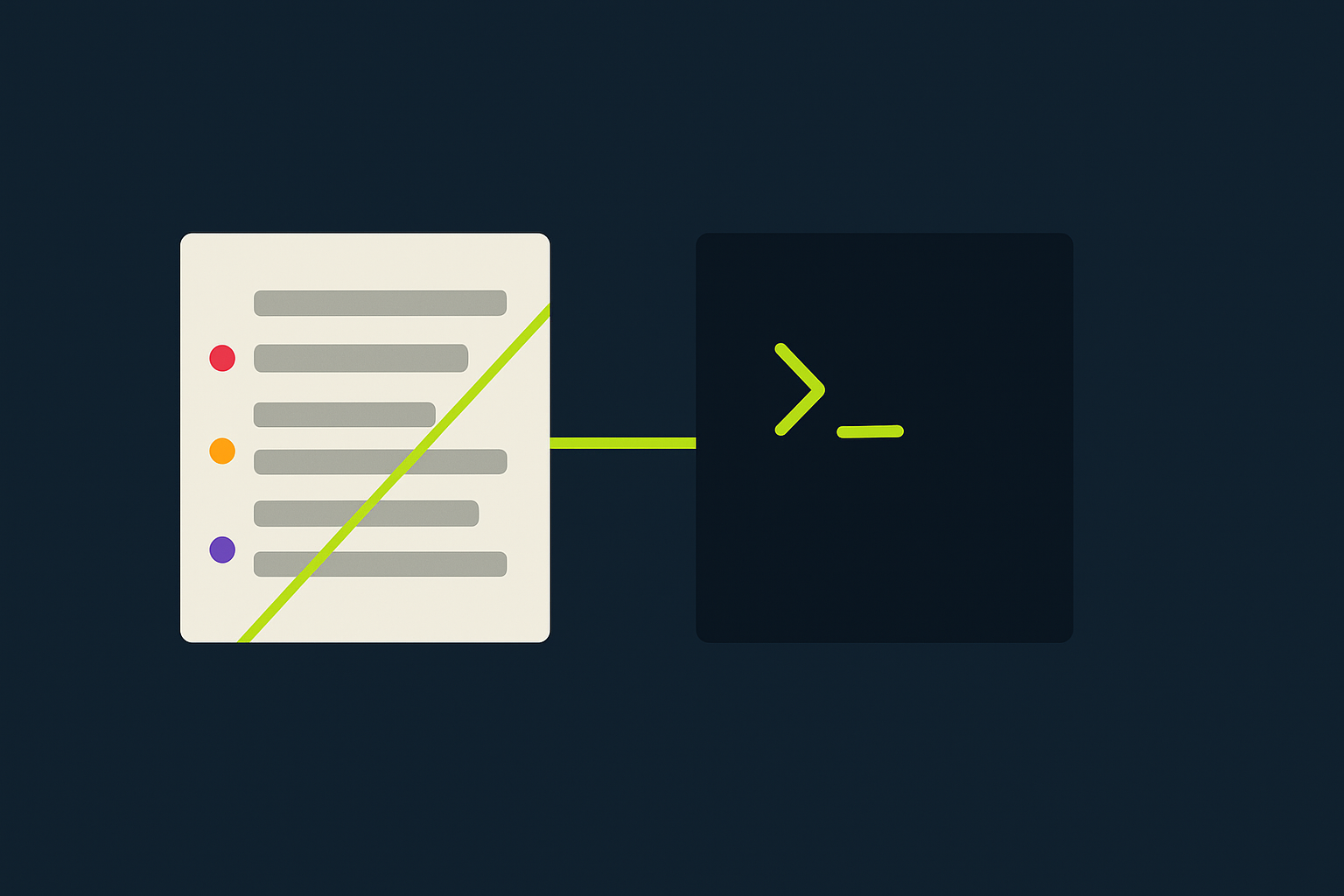
The severity system is simple and I like it. Important with a red marker means a bug to fix before merge. Nit with a yellow marker is minor. Pre-existing with a purple marker means the bug was already there and your PR did not cause it. The check run always finishes neutral, so it never blocks a merge on its own. You can tune all of it with a CLAUDE.md or a REVIEW.md file. Full behavior is in the Claude Code code review docs.
Two details keep it out of my week. It is Team and Enterprise only right now, and each review runs roughly 15 to 25 dollars and about 20 minutes. On a solo indie repo where I open six scrappy PRs a day, that is not my tool. So I went looking for the other one.
The one I actually run
The local command is /code-review, and it is the whole reason this post exists. You run it in the session where you are already working. It reviews your branch's commits ahead of upstream plus any uncommitted changes, so it needs actual work on the branch to chew on.
# review the current branch's changes before I open a PR
/code-review

# or point it at something specific
/code-review main...my-feature
It runs as a background subagent with its own context window, so it does not clog the conversation I am in. The findings land back in the session when it is done. There are flags that matter: --fix applies the findings to your working tree, and --comment posts them as inline PR comments. There is also /code-review ultra for a deeper cloud pass, but that one can bill usage credits, so I keep it for the rare gnarly branch.
One small gotcha worth knowing: a background review's --fix edits land outside your session checkpoints, so /rewind will not undo them. Use git to revert. I learned that the noisy way.
What it caught on my own agent-written code
Here is the honest n=1. Over two weeks I ran /code-review as a pre-push gate on diffs an agent had just written for me. Small keep rate on the agent's output, same as always. The review's job was to catch the stuff my tired eyes would wave through.
It earned its place on correctness bugs, not style. The three that stuck with me: an auth token refresh that raced with logout and left a stale session alive, a parser that silently returned zero on malformed input instead of throwing, and a database query I had not scoped to the current tenant. All three were live, all three were the kind of quiet bug that ships fine on Tuesday and pages you on Saturday.
What it did not do was understand intent. It will bless a function that is internally perfect and does the wrong thing. It flagged zero of my "this feature is subtly the wrong feature" mistakes, because those are not in the diff, they are in my head. That is not a knock. It is the line between review and judgment.
The REVIEW.md trap
This one cost me an afternoon, so learn it free. There are two tuning files. CLAUDE.md is your normal project memory, and the review reads it. REVIEW.md is a review-only file that gets injected as the highest-priority instruction into every agent in the managed pipeline. You use it to cap nit volume, redefine what Important means, skip generated files, that kind of thing.
Here is the trap: the local /code-review command does not read REVIEW.md. The docs say it plainly. It follows your CLAUDE.md like any session, and ignores REVIEW.md entirely. So I sat there tuning a beautiful REVIEW.md, running everything locally, wondering why nothing changed. Nothing changed because that file only steers the GitHub service I cannot use. If you are local-only, put your rules in CLAUDE.md.
So does AI reviewing AI code even work
The skeptics are loud, and they are not wrong to be. On the Hacker News thread about the feature, one commenter read the early numbers as heavily Claude-driven PRs carrying something like seven or eight bug-worthy issues each, and called it a poor advertisement for agent-built code. On Reddit the recurring line in 2026 is that Claude is great at generating a feature and shakier at judging one.
My field take sits in the middle. A second model pass that runs adversarially, hunts one bug class per agent, and verifies before it speaks does catch real bugs, including in code from the same model family. But it is a triage accelerant, not a safety net. It moves the automated first pass earlier so that when I do my own 15-minute manual triage, I am arguing about intent, not hunting for a missing null check. The two stack. Neither replaces the other.
If you want a dedicated third-party reviewer instead of the same vendor grading its own homework, tools like 
How I wire it into my week
My actual 2026 loop is boring, which is the point. Agent writes the feature. I read the intent, not the diff, first. I run /code-review before I push. I fix the red findings, argue with the yellow ones, ignore the purple ones unless they are near my change. Then I open the PR like a normal person.
It did not make me faster at writing code. It made me slower to ship a bug. On the list of things that actually help, that is near the top, right next to the agents I actually reach for and the subagents doing the quiet work behind this exact feature.
Still the best code reviewer on my machine is the one I do not have to schedule a meeting with.
P.S. I keep waiting for the day the reviewer flags my commit message. Do not give them ideas.
Written by
Dani ReyesDani Reyes writes DevMoment field notes on AI coding agents and vibe-coding workflows, tested on real projects rather than demos.
Frequently asked questions
Is Claude Code code review free in 2026?
The local /code-review command is part of your normal Claude Code usage, so for a solo dev it is effectively free to run on your own diff. The managed GitHub Code Review service is different: it is a research preview limited to Team and Enterprise plans, billed by token usage at roughly 15 to 25 US dollars per pull request through separate usage credits.
What is the difference between /code-review and Claude Code Code Review on GitHub?
They share a name but they are two products. /code-review is a local terminal command that reviews your branch or a diff before you push, running as a background subagent. The GitHub Code Review is a managed service where a fleet of agents review your pull requests on Anthropic infrastructure and post severity-tagged inline comments. The local command reads CLAUDE.md only; the GitHub service reads both CLAUDE.md and REVIEW.md.
What does Claude Code Code Review actually catch?
By default it focuses on correctness, not formatting: logic errors, security vulnerabilities, broken edge cases, and subtle regressions. Findings are tagged by severity as Important (a bug to fix before merge), Nit (minor), or Pre-existing (a bug already in the codebase). It does not approve or block your pull request, so your existing review workflow stays intact.
Does REVIEW.md work with the local /code-review command?
No. This is the trap. The docs are explicit that the local /code-review follows your CLAUDE.md like any Claude Code session but does not read REVIEW.md. REVIEW.md only steers the managed GitHub service. If you are a solo dev tuning your review rules in REVIEW.md and running everything locally, those rules do nothing. Put anything you want the local command to respect in CLAUDE.md instead.
Can an AI reviewing its own generated code really find bugs?
For a class of bugs, yes. The review runs multiple agents in parallel, each hunting a different issue type, then a verification step checks each candidate against actual code behavior to filter false positives. That adversarial second pass catches real correctness issues my first-draft eyes miss. But it is a triage accelerant, not a replacement for a human who understands the intent behind the change. It will happily pass code that does the wrong thing correctly.
How do I trigger a Claude Code review on a GitHub pull request?
If an organization Owner has enabled Code Review for the repo, comment @claude review as a top-level pull request comment to run a single review, or @claude review always to also subscribe the PR to a fresh review on every push. As of a July 2026 update, the bare @claude review no longer subscribes on its own.
Keep reading
The AI Coding Agents I Actually Reach For in 2026
Six AI coding agents sit in my dock in 2026, but I do not open all six every day. Here is the honest field log of which one I reach for when the task is a refactor, a chore, or a tight edit loop, plus the routing rule that keeps surviving.
Reviewing AI-generated code without losing my week (2026)
Reviewing AI-generated code is the new bottleneck. Here is the 15-minute triage system I run on every agent pull request, and when I just rewrite instead.

Claude Code Subagents: The 2 I Actually Kept (2026 Field Log)
Two weeks of pushing real work onto Claude Code subagents. The two I kept, the frontmatter line that actually decides delegation, and the gotcha that cost me an afternoon.